

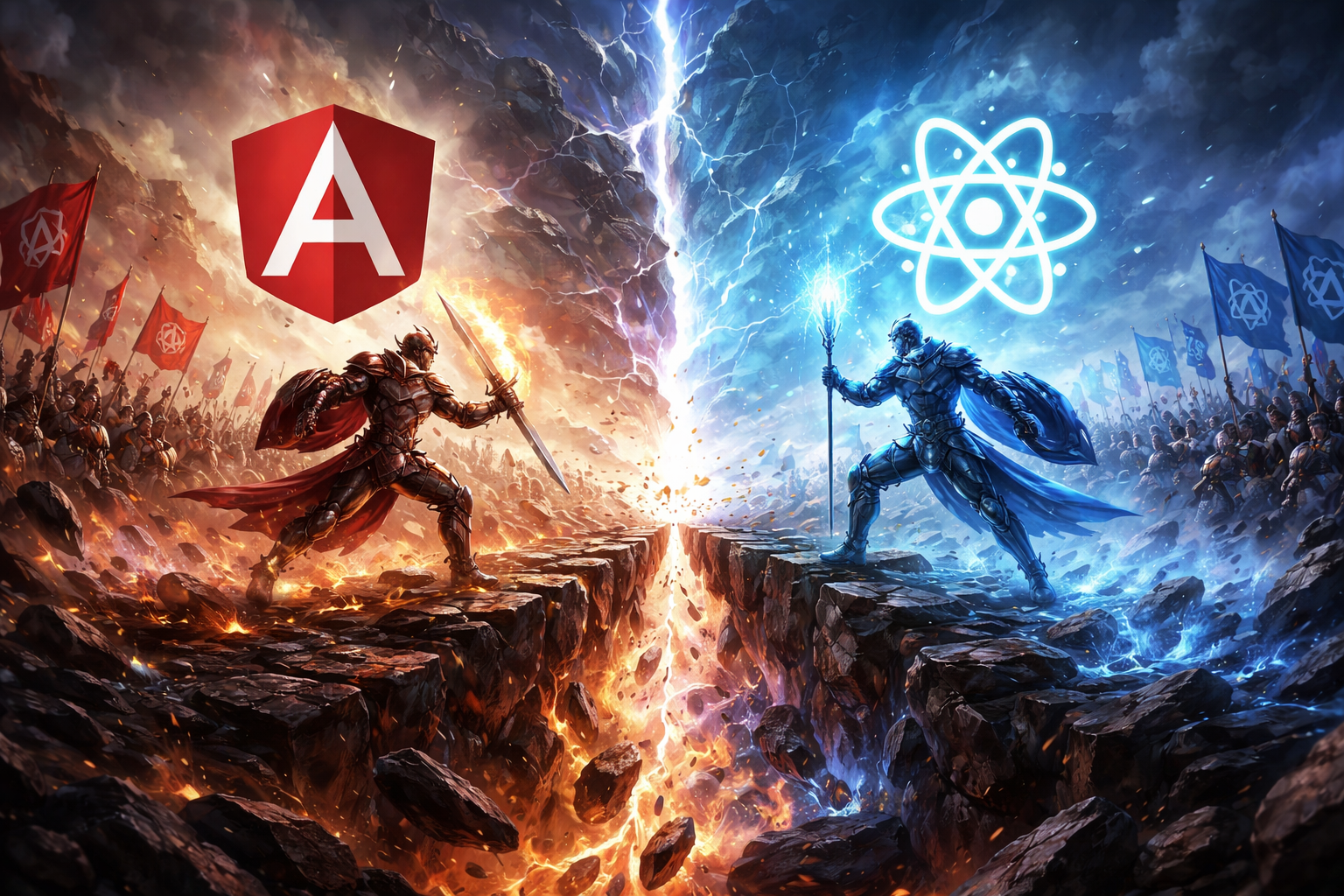
Angular vs React: Choosing the Right Front-End Framework for Your Project
When it comes to modern front-end development, few debates are as common as Angular vs React. Both are powerful, widely adopted, and capable of building dynamic user interfaces – yet they take very different approaches.
Choosing the right framework isn’t about popularity. It’s about aligning technology with your team, project goals, and long-term scalability.
Understanding Angular and React
Angular is a full-featured framework developed by Google. It provides a structured, opinionated approach with built-in tools for routing, forms, and state management.
React, developed by Meta, is a library focused on building user interfaces. It offers flexibility, allowing developers to choose supporting tools as needed.
Both are mature technologies with strong ecosystems.
Development Experience
Angular’s structured nature makes it ideal for large, enterprise-scale applications. Its conventions promote consistency across teams but come with a steeper learning curve.
React, on the other hand, offers a simpler entry point. Its component-based architecture encourages reusability and rapid development, making it popular with startups and agile teams.
Performance and Scalability
Both Angular and React deliver excellent performance when implemented correctly.
Angular handles complex applications well with built-in optimisation features.
React’s virtual DOM enables efficient rendering, particularly for interactive interfaces.
The real difference lies in architecture and team preference rather than raw speed.
Flexibility vs Structure
Angular excels when consistency and standardisation are priorities. Everything you need is included, reducing decision fatigue.
React shines when flexibility matters. Teams can tailor their stack to specific project needs.
Community and Ecosystem
Both frameworks benefit from massive community support, regular updates, and extensive documentation.
Angular is often favoured in enterprise environments.
React dominates in product-driven and startup ecosystems.
Which Should You Choose?
There’s no universal winner in the Angular vs React debate.
Choose Angular if you value structure, built-in tools, and enterprise scalability.
Choose React if you want flexibility, speed, and a lightweight approach.
The best framework is the one that aligns with your team and long-term vision.